Plenty of Parsippany homes don't look the way they did when they were built in the 1950s and '60s. Families added bedrooms, raised a second story, enclosed porches or built out the back. The township's 2020 Master Plan notes that homeowners in older neighborhoods often build out to the maximum their zoning allows.
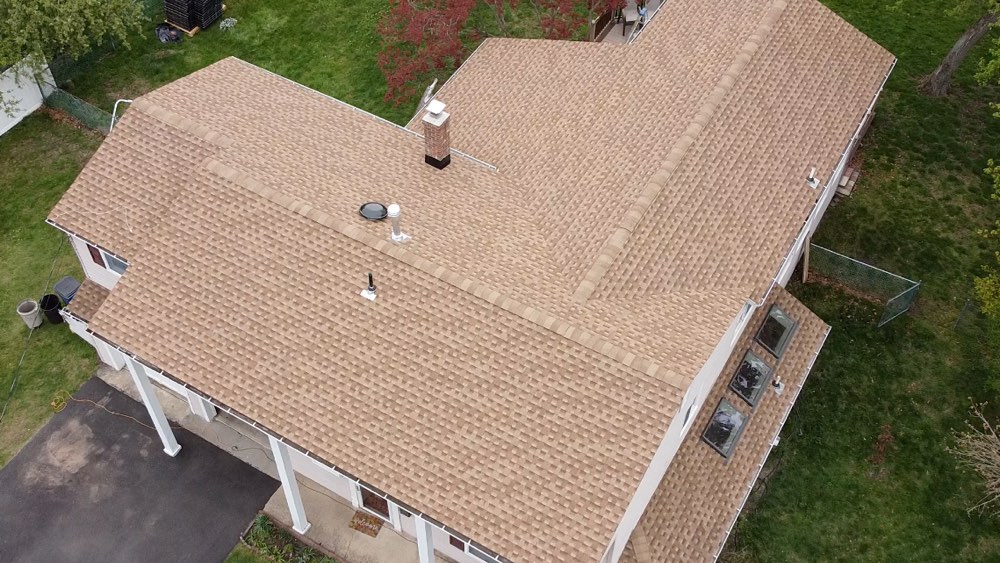
Re-roofing a house with additions means treating every joint where a newer roof meets the original as a planned detail: matched decks, continuous ice and water shield, rebuilt flashing and, where slopes differ, a proper transition. Those joints cause most leaks on expanded homes.
A re-roof is the one chance to fix all of them at once, because every shingle and piece of flashing is coming off anyway. Patching the same seams one leak at a time usually costs more over the years.
Why do additions leak where they meet the house?
Additions leak where they meet the house because the two roofs were built at different times, often with different slopes, deck heights and flashing methods. Water collects at the seam, and patched joints fail first.
Common trouble spots include a lower addition roof running into the original wall, two roofs meeting in a valley that wasn't there originally, and a low-slope rear addition shingled at a pitch too shallow for shingles.
What should a re-roof do at those joints?
A re-roof should rebuild each joint: step flashing course by course where a roof meets a wall, ice and water shield through every valley and seam, and counter-flashing or kick-out flashing to steer water into the gutter.
Where an addition's deck sits higher or lower than the original, the deck may need shimming or new sheathing so shingles lie flat across the transition. That can require a permit, which we file and list on the estimate.
What if the addition has a low-slope roof?
A low-slope addition roof below about 2 in 12 should get a membrane such as EPDM or TPO instead of shingles, because shingles need slope to shed water. Between roughly 2 and 4 in 12, shingles need extra underlayment.
Rear additions and enclosed porches are the usual suspects. If yours has been shingled too flat, stains along the back wall or ceiling are a common result.
Should the whole house match?
Matching shingles across the whole house usually looks better and simplifies flashing, which is why most owners re-roof every section at once. Replacing only one section can leave visible color differences and an extra seam.
If budgets require splitting the work, start with the section that's failing and plan the flashing so the next phase ties in cleanly.
What about dormers added later?
Dormers added after the original build need their own flashing at each sidewall, a small valley or saddle where they meet the main roof, and ice and water shield around them. Poorly flashed dormer cheeks are a frequent source of upstairs leaks.
On a re-roof, each dormer's step flashing is replaced course by course along both sides, and the siding is lifted or trimmed so the new flashing tucks behind it. Where a dormer's roof empties onto the main roof, a diverter or extra underlayment keeps that concentrated stream from wearing a channel into the shingles below.
Getting it priced
Ask for an estimate that names each roof section, each joint and how it will be flashed. We photograph every seam during the inspection. Request a free inspection, or see roof repair in Parsippany if one joint is the only problem.
Need help with this in Parsippany?
We'll take a look and give you a free written quote. Learn more about roof repair in Parsippany.